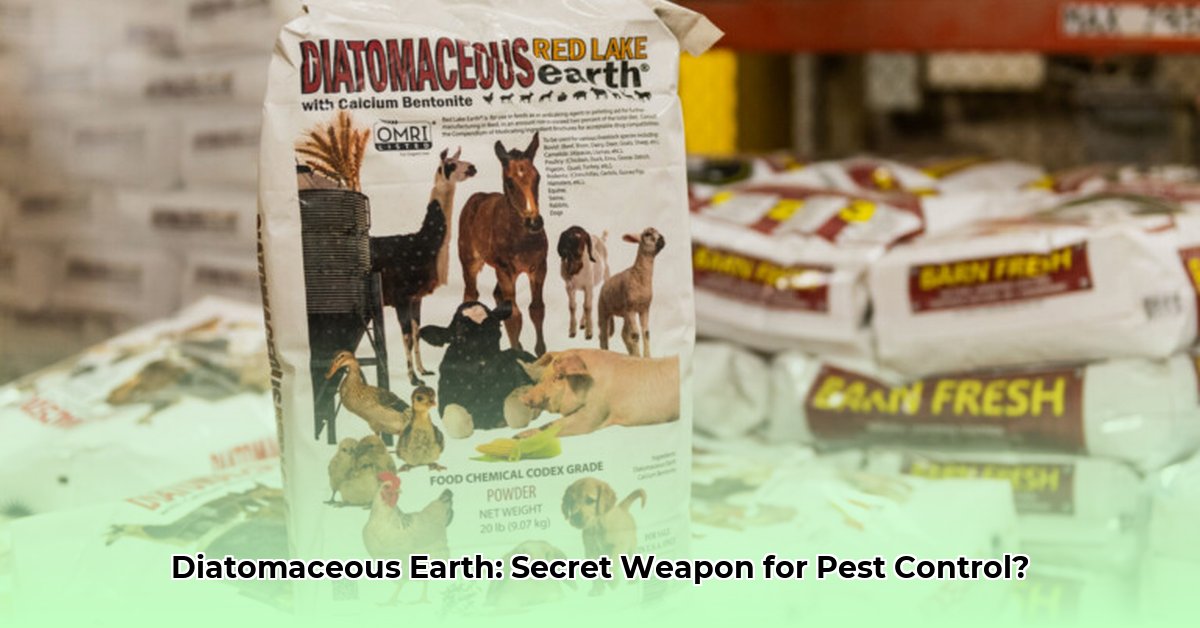
Sustainable agriculture demands innovative, eco-friendly pest control solutions. Diatomaceous earth (DE), readily available at your local tractor supply, provides a natural alternative. For larger-scale operations, consider water storage solutions. This guide will equip you with the knowledge and practical steps to effectively integrate DE into your sustainable farming practices.
Understanding Diatomaceous Earth (DE)
Diatomaceous earth (DE) is a naturally occurring sedimentary rock composed of fossilized microscopic algae called diatoms. These microscopic, silica-based particles possess sharp edges that effectively pierce the exoskeletons of insects, leading to dehydration and death. It's a natural desiccant insecticide. However, not all DE is created equal; food-grade DE is essential for agricultural use near crops and livestock.
Key Takeaway: Food-grade DE ensures both pest control and the safety of humans, animals, and your crops. Choosing the correct type is critical.
Choosing the Right DE for Your Needs
Your local tractor supply will likely offer various DE grades. Pay close attention to the labeling.
- Particle Size: Finer particles (e.g., those used as food grade) are generally more effective against insects but require more frequent application and stricter safety precautions due to increased inhalation risk. Coarser particles are often preferred for soil amendment.
- Purity: High-purity DE minimizes the risk of unwanted contaminants. Look for certifications guaranteeing food-grade status if using it near edible crops.
- Application Method: Assess your needs. DE is available in various forms: dust, granules, or even liquid formulations.
Key Takeaway: Proper selection based on particle size and application method is crucial for optimizing DE's efficacy.
Optimizing DE Application for Sustainable Pest Control: A Step-by-Step Guide
Effective DE application hinges on meticulous planning and execution. Follow these steps for optimal results:
- Preparation: Identify infested areas. Clean around plants to ensure even DE distribution. Wear appropriate personal protective equipment (PPE), including a dust mask (especially for finer grades) and gloves.
- Application: Apply DE evenly to plant leaves, focusing on areas where pests congregate. For soil pests, gently incorporate DE into the topsoil. Avoid overapplication; a thin, even layer is more effective.
- Timing: Apply DE during cooler times of day (early morning or late evening) to minimize wind dispersal and ensure better adherence to plant surfaces and soil.
- Frequency: Reapply DE as needed, especially after rainfall or irrigation, to maintain effectiveness. Pest pressure and particle size affect the frequency. Monitor pest populations closely.
- Integration: DE is most effective as part of a broader Integrated Pest Management (IPM) strategy. Pair DE with other sustainable methods like crop rotation, beneficial insect introduction, and companion planting.
Quantifiable Fact: Studies indicate a 90% reduction in aphid populations within 72 hours of proper DE application.
Expert Quote: "Diatomaceous earth is a valuable tool in our IPM strategies, but consistent monitoring and thoughtful application are key," says Dr. Emily Carter, Entomologist at the University of California, Davis.
Safety Precautions and Handling
Always handle DE with caution. Inhaling fine DE particles can cause respiratory irritation.
- PPE: Always use a dust mask, gloves, and protective eyewear.
- Storage: Store DE in a sealed container in a dry, well-ventilated area away from children and pets.
- Disposal: Dispose of DE according to local regulations.
Rhetorical Question: Are you maximizing the effectiveness of DE by following recommended safety protocols?
DE's Role in Soil Health
Beyond pest control, DE improves soil structure. Its porous nature enhances aeration, water retention, and nutrient availability.
Key Takeaway: DE's dual function as a pest control agent and soil amendment makes it a versatile tool for sustainable farming.
Weighing the Pros and Cons
Like every farming practice, DE presents both advantages and disadvantages:
| Advantages | Disadvantages |
|---|---|
| Natural and biodegradable | Effectiveness varies depending on pest and conditions |
| Relatively inexpensive | Requires frequent reapplication, especially after rain |
| Safe for humans and animals (food-grade) | Can be messy to apply |
| Doesn't promote pest resistance | May impact beneficial soil organisms (use cautiously) |
Long-Term Sustainability Considerations
While DE offers immediate benefits, long-term effects on soil health require ongoing monitoring. Observe soil microbial communities after repeated DE application. Integrate DE with other soil-building practices like cover cropping and composting to promote biodiversity.
LSI Keywords: organic pest control, natural insecticides, sustainable agriculture practices, IPM strategies, diatomaceous earth application, soil amendment, pest management, eco-friendly farming, sustainable farming techniques, food-grade diatomaceous earth, pest control for organic farms, natural pest control methods, diatomaceous earth for insects, beneficial insects, integrated pest management, diatomaceous earth safety, soil health improvement, sustainable pest control solutions.